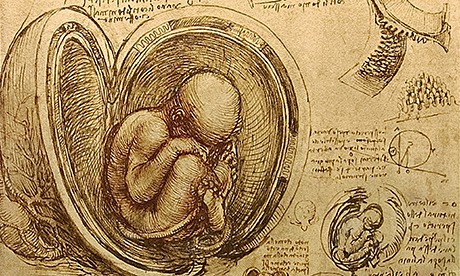
• Royal Collection, Windsor Castle
Caravaggio – The Beheading of Saint John the Baptist (1608)

Caravaggio's The Beheading of Saint John the Baptist.
Caravaggio
shows a murderous moment in a prison yard. The executioner has drawn a
knife to sever the last tendons and skin of John the Baptist's neck.
Someone watches this horrific moment from a barred window. All around is
sepulchral gloom. Death and human cruelty are laid bare by this
masterpiece, as its scale and shadow daunt and possess the mind.
• St John's Co-Cathedral, Valletta, Malta
Rembrandt– Self-Portrait with Two Circles (c 1665-9)

You
are not looking at Rembrandt. He is looking at you. The authority of
genius and age gaze out of this autumnal masterpiece with a moral
scrutiny that is terrifying. Rembrandt seems to see into the beholder's
soul and perceive every failing. He is like God. He is the most serious
artist of all, because he makes everyone who stands before him a
supplicant in the court of truth.
• Kenwood House, London
Chauvet cave paintings (c 30, 000 years ago)

Who
painted these exquisitely lifelike portraits of animals? There was no
such thing as writing in the ice age so nothing is known of the names,
if they had names, of these early people. Cave artists may have been
women; they may have been children. What is known is that Homo sapiens,
our species of human, makes its mark with these paintings that are as
beautiful and intelligent as anything created since.
• Chauvet-Pont-d'Arc Cave, Ardèche, France
Jackson Pollock – One: Number 31, 1950 (1950)

The
art of Jackson Pollock is a modern mystery. How, from flinging paint on
a canvas laid on the ground, did he create such beauty and inner
structure? Like a solo by Charlie Parker or Jimi Hendrix, his freeform
improvisations loop and lurch and yet achieve a profound unity. Pollock
only held this together for a short period of brilliance. This painting
is a cathedral of the mind.


No comments:
Post a Comment